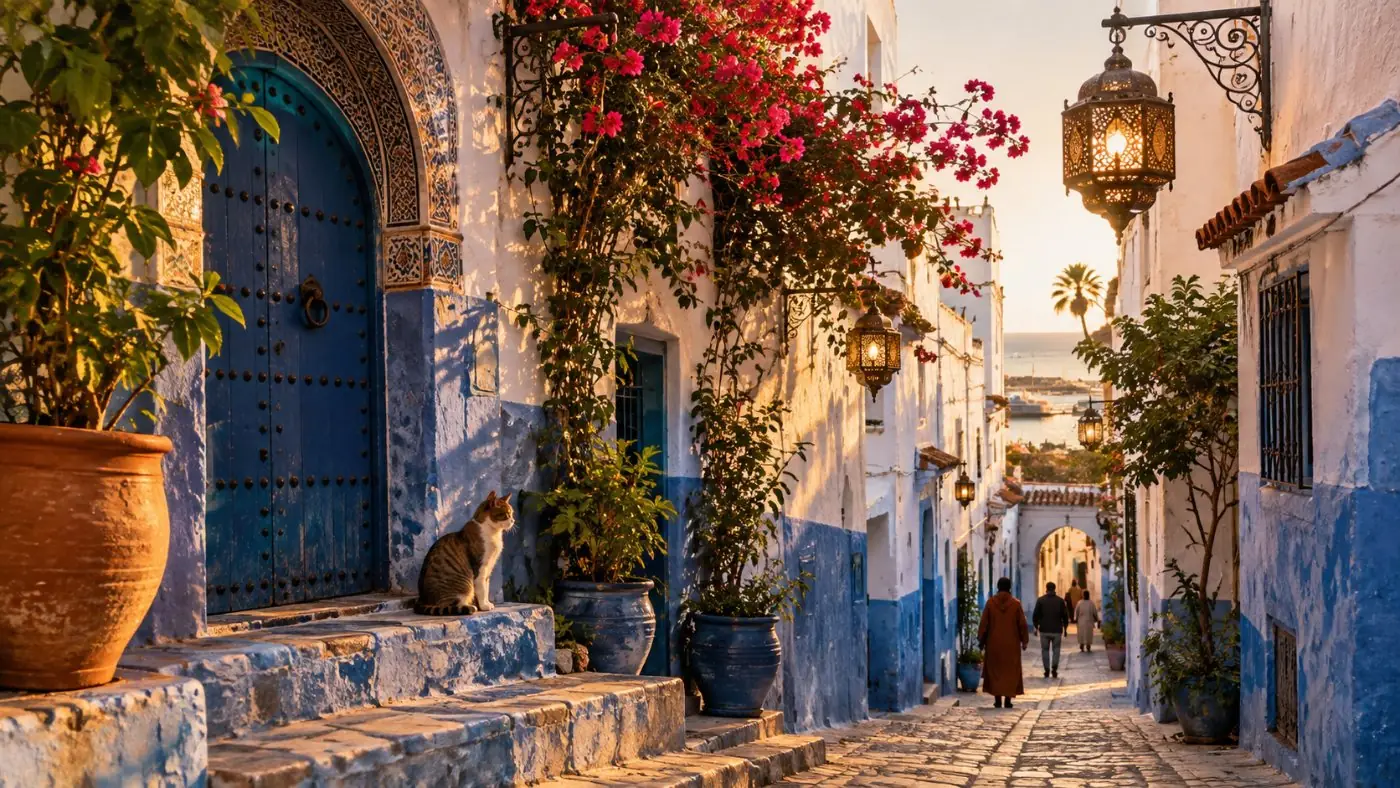
Booking choice: The Tangier day trip with lunch and ferry, from $100 per person. Check dates Tour details
Tangier had a rough reputation in the 1990s and 2000s, much of it about hustlers at the old port. The city has changed a lot since. The ferry port has been rebuilt, the seafront redone, and the medina is far calmer than its reputation.
Below we quote the UK Foreign Office and the US State Department as they stood in early November 2026. Check both before you travel: advice can change overnight.
The quick answer
Yes, Tangier is generally safe to visit. The US State Department rates Morocco Level 2, exercise increased caution, because of terrorism, and the UK government does not advise against travel to Tangier. The real risks are petty theft, scams and unofficial guides. Keep valuables close, agree taxi prices, drink bottled water, and walk away from anyone who won't take no.
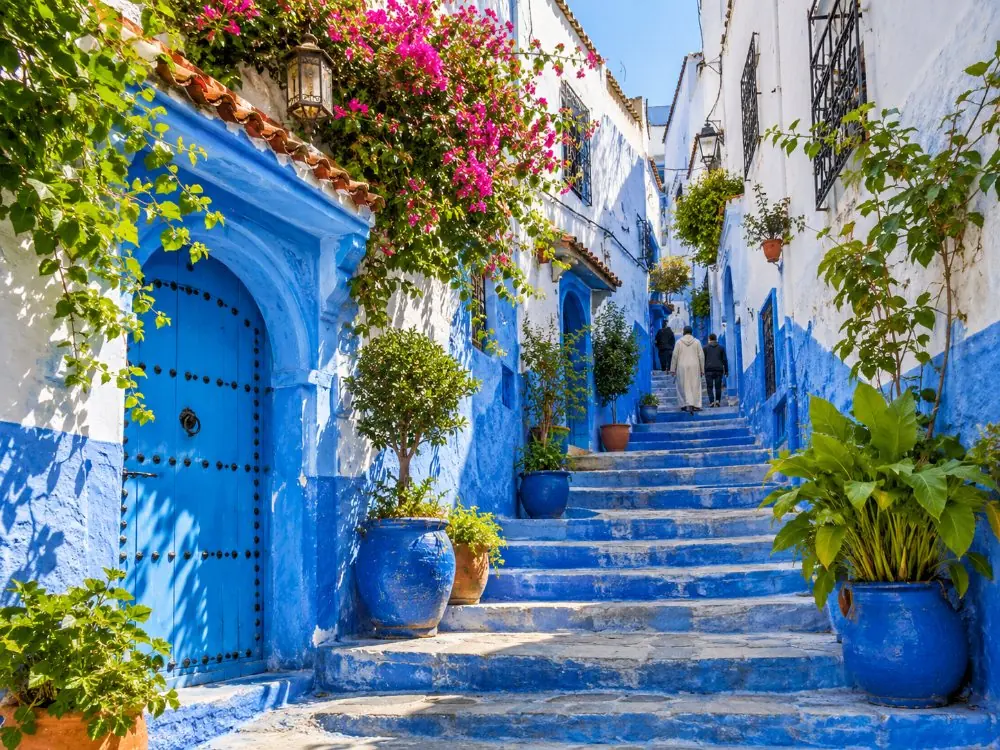
Is Tangier safe to visit right now?
Yes. The US rates Morocco Level 2 of 4, exercise increased caution, due to terrorism. The UK's advice, still current on 1 November 2026, does not advise against travel to any part of northern Morocco.
The US State Department has Morocco at Level 2: Exercise increased caution, reissued in April 2025, citing terrorism. That is the same level as several Western European countries, and one step above the lowest.
The UK Foreign Office page was last updated on 19 August 2026 and confirmed as still current on 1 November 2026. It does not advise against travel to Tangier or the north. Its safety page says terrorists are likely to try to carry out attacks in Morocco, and that attacks could be indiscriminate, including at transport hubs, tourist sites and crowded places. That wording appears for many countries, including European ones. Its only regional warnings concern the closed Algerian border and Western Sahara, a long way from Tangier.
In practice: read the current advice before you sail, keep your phone charged, and follow the guide's lead on a group tour.
Is it safe to walk around in Tangier?
In the daytime, in the medina, the Kasbah and the new town, yes. Take normal city care after dark and avoid empty lanes at night.
The UK advice says petty crime is common in tourist areas, especially in medina quarters and on beaches, and suggests avoiding quiet areas after dark. That matches Tangier. The busy lanes between the Petit Socco and the Kasbah are full of shoppers, families and school kids in the day. At night parts of the medina empty out fast, and a dark, deserted lane is where trouble, if any, happens.
- Carry a copy of your passport and keep the original zipped away.
- Wear your bag across the front in crowds.
- Leave expensive jewellery in Spain.
- After dark, stick to the Grand Socco, the boulevards and lit streets, or take a petit taxi.
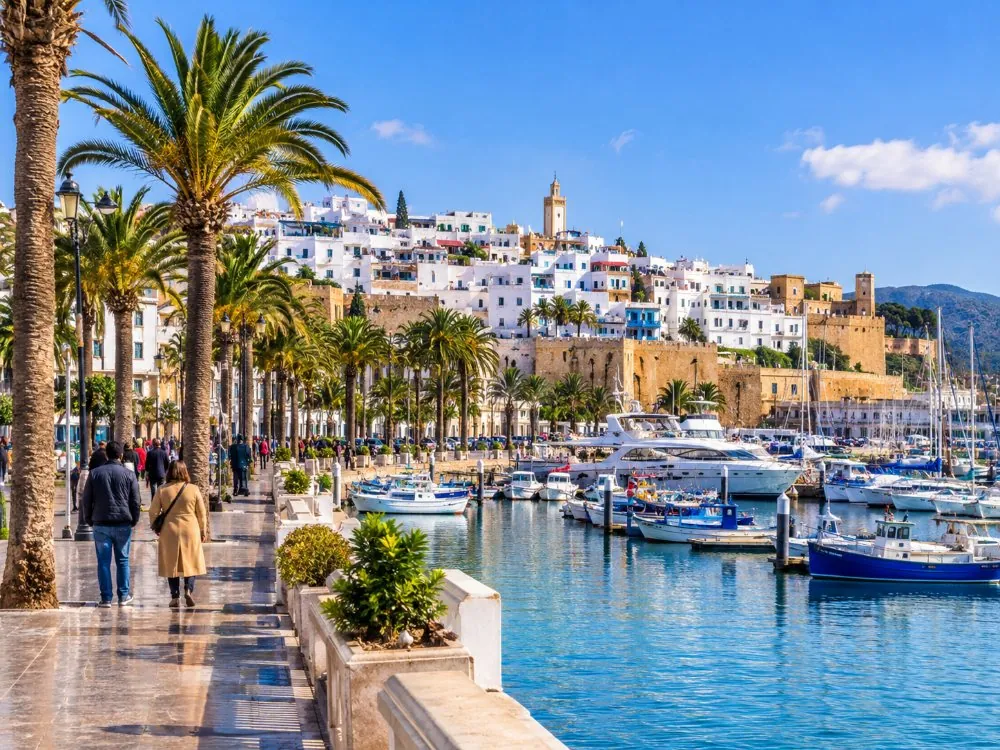
What to avoid in Tangier?
Unofficial guides, unagreed taxi fares, anyone offering drugs, photos of people without asking, and lanes you don't know after dark.
- Unofficial guides. The men at the port gate who offer to show you around are not your guide. Your tour guide waits at the meeting point with a sign or the group.
- Unmetered taxis. Use the meter in petit taxis, or agree the price first in a grand taxi.
- Drugs. Cannabis gets offered quietly in the north. The UK advice is blunt: Morocco has a zero-tolerance approach, and possession can mean a long jail sentence. Don't carry anything for anyone, and don't leave bags unattended.
- Photographing people without asking. Many Moroccans object, and some will ask for money.
- Arguing with persistent sellers. It only extends the conversation. Smile, say no thanks, keep walking.
- Missing your boat. Tangier is an hour behind Spain this winter. Check which time your ticket shows.
A guide with the group from the meeting point onward, return ferry and lunch included.
Check dates for the Tangier day trip with lunch and ferryWhat are the common scams in Tangier?
The closed-street detour, the free tour that ends in a shop, the henna that turns into a bill, and the unmetered taxi. None is dangerous; all cost money.
The UK government notes that scams and credit card fraud are common, and warns about sellers swapping in cheaper goods. In Tangier, these are the regulars:
- "That way is closed." A helpful stranger says the street or museum ahead is shut and offers a better route, which ends at his cousin's shop. Check your map and carry on.
- The friendly student. Someone practising English walks with you for twenty minutes, then asks for payment as a guide.
- Henna and photos. A hand is decorated before you agree, or a photo with a snake or a costume becomes a fee. Say no early.
- The taxi. "The meter is broken." Then agree a price before moving, or take the next cab.
- Swapped goods. Watch your carpet or lamp being wrapped, and pay by card only where you trust the shop.
A guided group avoids most of this simply by being a group. The day trips compared guide covers the shop stops tours do make.
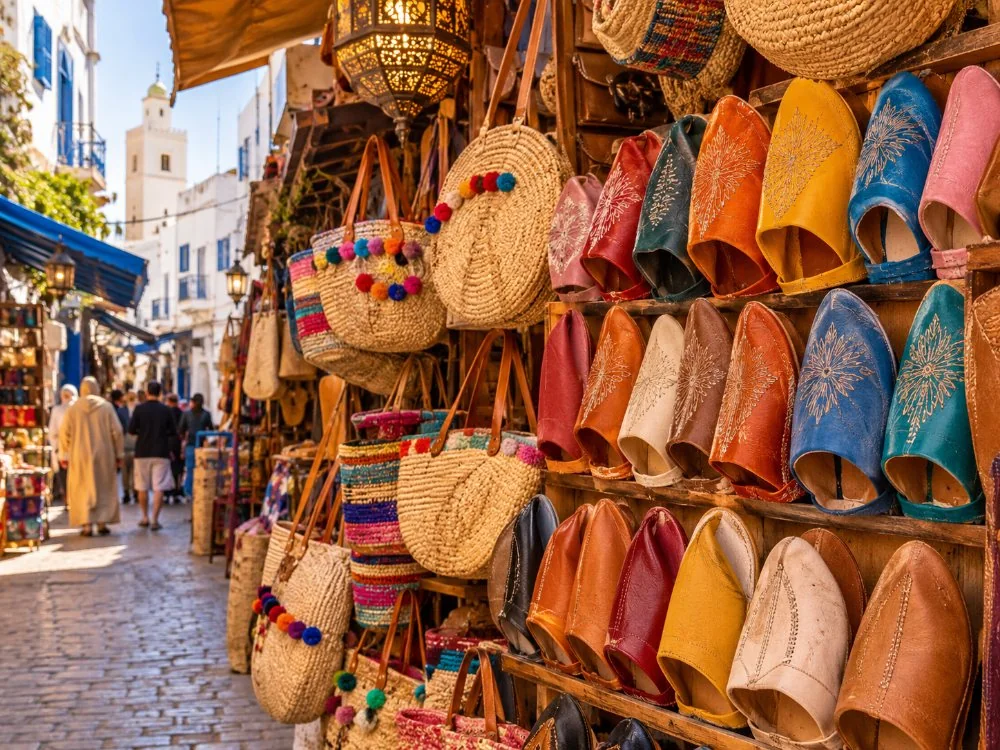
Is Tangier safe for women travellers?
Generally yes, with more unwanted attention than in Spain. Covering shoulders and knees, and walking with confidence, cuts it down a lot.
The UK advice says women may get unwanted attention, especially travelling alone, and suggests loose clothing that covers the arms, legs and chest. In Tangier that mostly means comments and people trying to start a conversation, not physical danger. It is heavier around the port and in the souk than in the new town or on a guided walk.
- Dress for a conservative town: long skirt or trousers, a light top that covers the shoulders. A scarf helps in mosques' surroundings and against the sun.
- Ignore comments. Replying in any language is taken as an opening.
- Sit with families or other women in cafés if you want to be left alone.
- Women travelling alone often find a group day trip the easiest first visit.
What not to eat in Morocco?
Tap water, ice of unknown origin, raw salads washed in tap water, unpeeled fruit, and food that has sat out warm. Freshly cooked hot food, bread and boiling-hot mint tea are the safe bets.
Traveller's stomach upsets are the most common health problem on a Morocco trip, and most come from water. The basic food and water rules apply:
- Water: drink sealed bottled water. Use it to brush your teeth too if you have a sensitive stomach.
- Ice: skip it unless you are in a hotel or restaurant you trust.
- Raw salads and herbs: they are often rinsed in tap water. The cooked Moroccan salads (zaalouk, taktouka) are a safer start.
- Fruit: eat what you can peel yourself, such as oranges and bananas.
- Lukewarm food: avoid anything that has been standing around warm, at buffets or stalls.
- Unpasteurised dairy: fresh cheeses and milk drinks from stalls are a gamble.
- Shellfish from street stalls on a hot day.
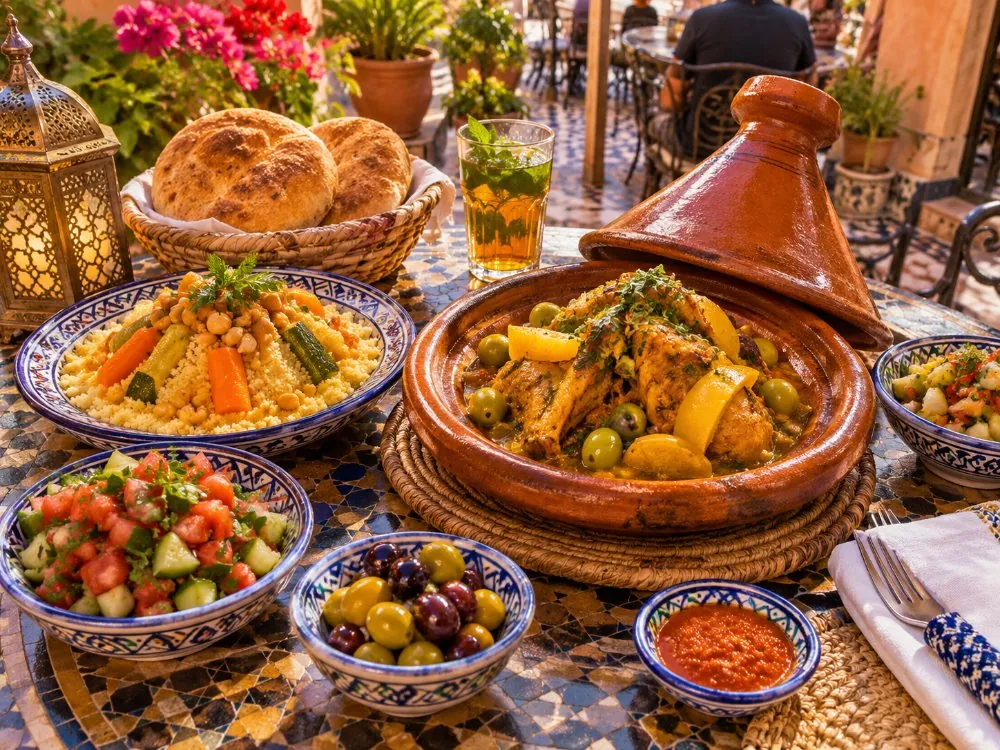
What's fine: a tagine served bubbling, grilled fish, harira soup, fresh bread, and mint tea made with boiling water. Day-trip lunches are set menus in restaurants used to visitors. Pork is not served, and alcohol only in licensed places.
Do they speak English in Tangier?
In tourist shops, restaurants and on every tour here, yes. In the street you hear Moroccan Arabic (Darija), French and a lot of Spanish.
Spanish is widely understood in Tangier, thanks to its history and the Spanish TV that reaches across the Strait. French is the language of business and signs. Darija is what people speak at home, and Amazigh is widely spoken in the Rif to the east. English has spread fast with tourism and is common among younger people and anyone working with visitors.
A few words go a long way: salam alaikum (hello), shukran (thank you), la, shukran (no, thank you). Every group trip here has an English-speaking guide; Baleària's also offers French and German.
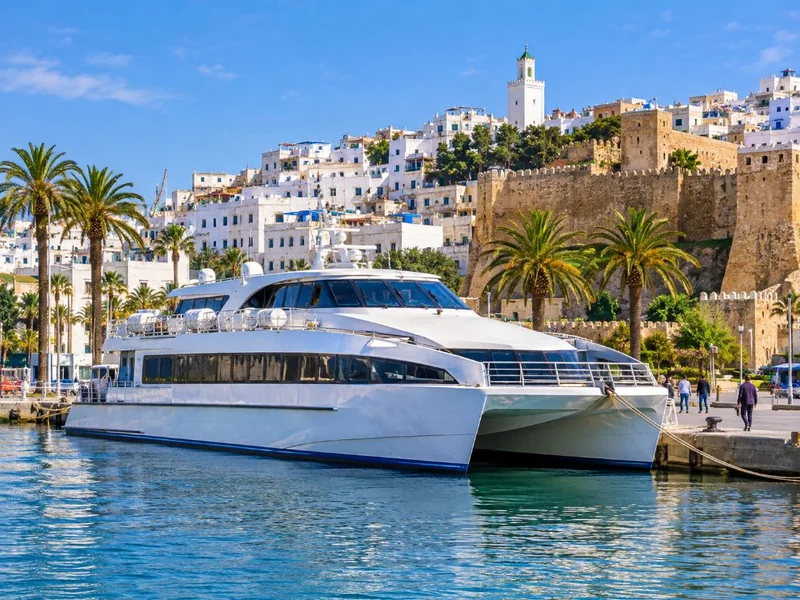
Guides in Spanish, English, French and German, a 9:00 or 11:00 boat, and lunch in Tangier.
Explore Baleària's Tangier day trip Tour detailsWhat should you do if something goes wrong in Tangier?
Call 190 for the police or 150 for an ambulance, tell your guide, and contact your insurer. Report thefts at a police station for the paperwork.
The UK government lists Morocco's emergency numbers as 190 for police, 150 for ambulance and fire, and 177 for the gendarmerie.
- Travel insurance: European health cards do not work in Morocco, so take insurance that covers it. Baleària's day trip includes travel insurance; the others don't say so.
- Lost passport: contact your embassy; most are in Rabat. You can't take the ferry back without a valid document.
- Missed boat: go to the operator's desk at Tangier Ville. On a tour, call the operator straight away.
Frequently asked questions
Is Tangier safer than Marrakech?
Both carry the same national advice level. Tangier's medina is smaller and calmer, with fewer of the motorbikes and crowds of Marrakech. The touts are similar. See Tangier or Marrakech.
Is Tangier safe at night?
The main boulevards, the Grand Socco and the seafront are busy into the evening. Avoid empty medina lanes after dark, and take a petit taxi if you are unsure.
Can I drink the tap water in Tangier?
Most visitors stick to sealed bottled water, which is cheap and sold everywhere. It is the simplest way to avoid an upset stomach on a short trip.
Is a group tour safer than going alone?
It is easier rather than safer: the guide handles touts, taxis and the route. Plenty of people visit Tangier alone without trouble.
Ready to book
Choose your day trip
Free cancellation up to 24 hours before on every option. Prices are from-prices in USD and move with the season.
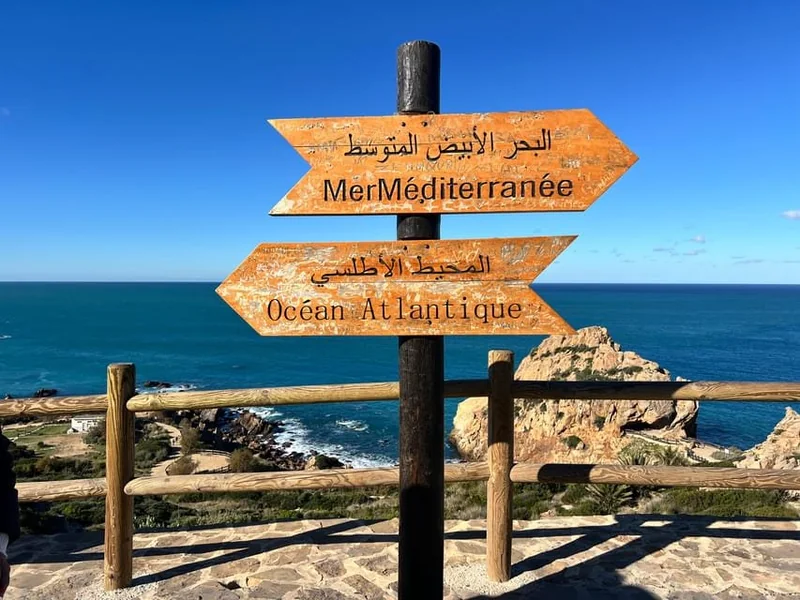
Tangier Day Trip with Lunch and Ferry
- Return fast ferry Tarifa to Tangier Ville
- Coach to Cap Spartel and the Caves of Hercules
- Guided walk through the medina and Kasbah
Baleària Full-Day Trip to Tangier
- Return fast ferry with Baleària
- Guide in Spanish, English, French or German
- Air-conditioned vehicle around Tangier
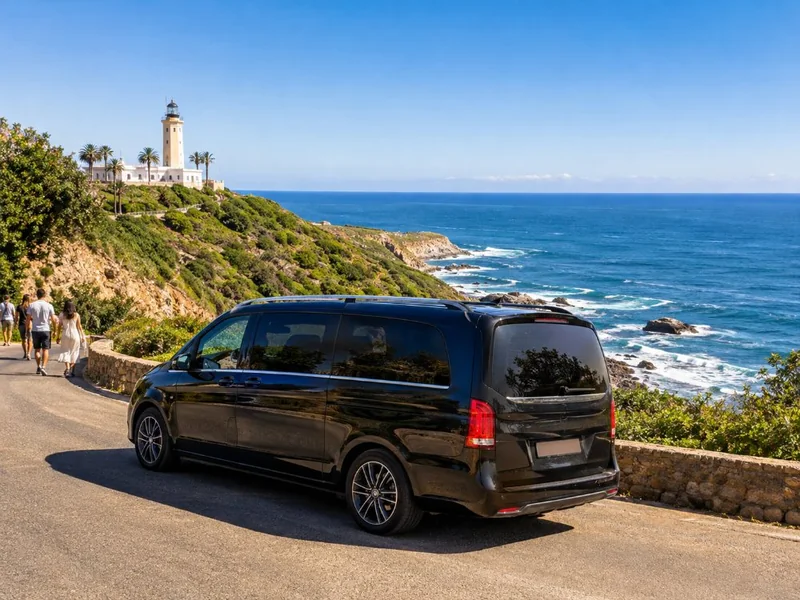
Private Tangier Day Tour from Tarifa or Málaga
- Private guide and driver for your group
- Ferry tickets
- Pickup and drop-off